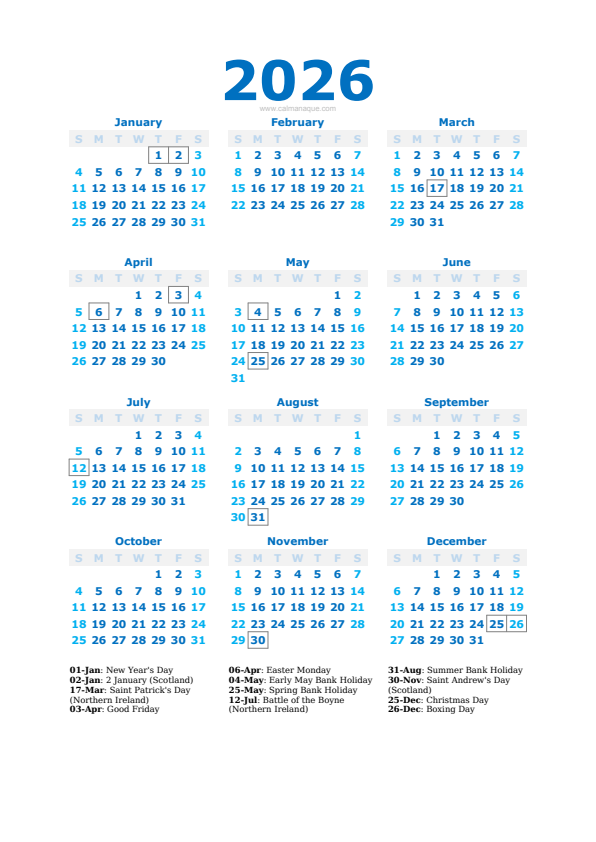
The practice of designating a substitute bank holiday when a traditional date coincides with a weekend serves as a pragmatic hallmark of the British public calendar. In the instance of Boxing Day 2026, which occurs on a Saturday, the legislative framework ensures that the holiday does not simply vanish into the weekend. By shifting the observance to Monday, December 28, the United Kingdom upholds the continuity of its public holidays, maintaining the social and economic rhythms that define this time of year. This mechanism, formally recognized within the Banking and Financial Dealings Act of 1971, provides the necessary administrative flexibility to balance cultural traditions with the realities of a modern working week, ensuring that the holiday remains a period of respite rather than a lost entitlement.
The origins of Boxing Day are deeply rooted in historical practices of charity and service, distinguishing it from the preceding day of Christmas. While Christmas Day is traditionally centered on private family gatherings and religious observance, the following day historically functioned as a moment for the broader community. The name itself reflects a time-honored custom in which employers, merchants, and the wealthy would distribute boxes containing gifts, money, or leftover food to their staff and the less fortunate. This act of giving recognized the efforts of those who provided essential services, often serving as a form of year-end bonus that allowed recipients to enjoy their own festive celebrations. Over the centuries, the specific social functions of these gifts evolved, eventually transitioning into the modern cultural phenomenon that characterizes the post-Christmas period in the United Kingdom.
Today, the day retains a unique position in the British consciousness, blending these historical legacies with contemporary customs. Many families utilize the break as an opportunity to host secondary gatherings, moving away from the formal structures of Christmas day toward more informal, relaxed interactions. Outdoor activities have also become a staple, with tradition often seeing people engage in winter walks, attending local sporting events, or participating in the bustling retail activity that frequently accompanies the start of seasonal sales. The transition of the holiday to Monday ensures that these diverse expressions of the day can continue without the disruption of immediate employment, thereby sustaining the collective downtime that is integral to the festive atmosphere.
Beyond the social dynamics, the observation of this holiday highlights the enduring significance of public downtime in an increasingly digital and globalized economy. For many, the substitute holiday acts as a vital bridge, extending the festive break and providing a psychological cushion between the intensity of Christmas and the approach of the New Year. It functions as a scheduled pause that allows for travel, the reconciliation of social commitments, and the completion of personal tasks that often accumulate during the frantic weeks of December. The legislative commitment to these days reflects a societal consensus that collective rest is a fundamental component of public life, reinforcing the value placed on time spent outside of formal productivity cycles.
From a regulatory perspective, the management of these dates involves intricate planning across various sectors. Transport services, emergency response teams, and hospitality venues must adjust their operations to account for the shifted date, ensuring that the necessary services remain available while respecting the rights of workers to enjoy the holiday. This coordination underscores the complexity of modern scheduling, where even minor adjustments to the calendar require careful implementation to maintain consistency. As communities across the United Kingdom prepare for December 28, the substitute holiday serves as both a convenience and a cultural anchor, confirming the resilience of festive customs despite the shifting alignment of the calendar from year to year. Ultimately, this day invites a collective slowing of pace, allowing the nation to transition with relative ease toward the concluding days of the year, framed by both the echoes of ancient traditions and the structure of contemporary public policy.